
If you run a hospital, clinic, or healthcare facility, you work with many third-party vendors. These vendors may sell medical devices, provide IT support, or offer legal services.
Vendor credentialing is the process you use to check that these suppliers meet internal standards before they step on site. It helps you confirm who they are, what training they have, and whether they meet safety and compliance regulations.
This article defines vendor credentialing and its importance, so you can decide how it fits into your healthcare organization.
What Is Vendor Credentialing in Healthcare Facilities?
Vendor credentialing is a systematic approach used by healthcare facilities to review vendor qualifications before granting access to databases and physical sites.
Vendor credentialing applies to third-party entities that interact with your healthcare organization. These include contractors, sales representatives, service providers, and software vendors.
Without careful vetting, you risk gaps in safety, data security, and compliance.
The Purpose of Vendor Credentialing
The purpose of vendor credentialing is to vet third parties and vendor representatives, ensuring they meet qualifications, certifications, and healthcare compliance standards.
It sets a clear and efficient process for verifying third-party data and background details. This creates a single point of review, so vendors are held to the same expectations across different locations and teams.
Benefits of Vendor Credentialing
Here are the main advantages of vendor credentialing for healthcare organizations.
1. Ensure Regulatory Compliance
Vendor credentialing helps you meet healthcare compliance requirements by capturing all required documents.
You set clear rules about what vendors must submit, such as licenses, insurance coverage, and health records.
With proper documentation, you can show auditors and regulators that you follow the same steps for every vendor.
This reduces guesswork and provides a record of vendor compliance actions taken within your facility.
2. Protect Patient Safety
Vendor credentialing lets you confirm that anyone entering your facility has passed your verification process. This typically involves background checks, health screenings, immunization records, and work clearances.
By confirming these details, your patients are less likely to be exposed to unqualified people or unchecked services.
3. Boost Operational Efficiency
A clear vendor credentialing process removes guesswork about vendor status.
When you have organized records and real-time visibility into workflows, you spend less time asking vendors for missing papers or chasing down updates. This helps you quickly decide who is cleared to enter your healthcare facility.
Vendor credentialing also reduces interruptions in daily operations because vendors arrive ready to work under clear rules. They no longer need to ask employees how to do specific tasks, freeing up valuable staff time for patient care and revenue generation.
4. Reduce Risks and Liabilities
Vendor credentialing lowers risk by providing a clear record of who has met your standards before entering your healthcare facility.
With documented checks, you can show that your organization did its part to protect patients and staff if an incident occurs.
Tracking vendor status also helps you catch expired credentials or missing requirements before they become a liability. This protects you from claims tied to third-party access.
5. Protect Sensitive Data
Third parties may need access to patient records, IT systems, or other secure areas within your healthcare facility.
Proper vendor credentialing tells you who has permission and whether their access rights match their roles.
It follows strict rules for data privacy, such as the Health Insurance Portability and Accountability Act (HIPAA).
If changing regulations affect how you maintain data, credentialing helps you check that vendors stay current with new requirements. This protects sensitive client information and prevents security breaches.
6. Control Facility Access
Vendor credentialing makes it easier to manage who enters your space and for how long.
You can track vendor schedules, badge status, and access levels in one place. This helps you avoid overcrowded areas or unauthorized presence.
It also allows you to revoke access when needed to keep your facility safer for both patients and employees.
Key Requirements in Vendor Credentialing
Here are the credentialing requirements you need to collect and review from each vendor:
- Business credentials: Request business licenses, tax ID numbers, and company profiles that confirm the vendor operates as a legal entity.
- Health and immunization records: Ask for proof of vaccinations, TB tests, health screenings, and clearance records to meet your healthcare facility’s safety and access rules.
- Compliance training and attestations: Look for completed HIPAA training, safety courses, and signed forms agreeing to follow compliance programs and internal policies.
- Insurance: Make sure the vendor has active general liability insurance, workers’ compensation coverage, and bonding.
Best Practices for Vendor Credentialing
These best practices help healthcare organizations manage vendor credentialing efficiently:
Standardize the Vendor Credentialing Process
Create a single set of rules that applies to every vendor across your organization. Define required documents, review steps, approval rules, and renewal timelines.
When every department follows the same credentialing process, vendors receive consistent instructions and ask fewer questions. This also reduces confusion for staff who review vendor records.
Centralize Vendor Data
Store all vendor information in one shared system instead of emails, paper files, or spreadsheets.
Centralized data makes it easier for teams to find vendor status, documents, and approval history. It also supports better vendor management by providing one place to review access rights and expiration dates.
In contrast, mistakes and missed updates happen more often when vendor data is spread across different platforms.
Adopt Software Solutions
A dedicated platform or vendor credentialing service replaces time-consuming tasks with standardized workflows.
Vendors can upload documents, receive real-time updates, and track approval status on their own without constant follow-ups.
Many tools also offer a mobile app, which enables vendors to submit requirements faster while off-site. This reduces delays caused by missing data.
Conduct Regular Audits
Schedule routine reviews of vendor records to catch expired documents or missing items early.
Regular audits also reveal patterns, such as vendors who often miss deadlines or departments with slow approvals. This helps you adjust rules or training to address recurring challenges.
Support Vendor Credentialing With Provider Credentialing and Licensing from Licentiam
Vendor credentialing helps control who can enter your healthcare facility and access data, but it does not cover the full scope of compliance, safety, and risk reduction.
To support safe care delivery, you also need a clear process for provider credentialing and licensing.
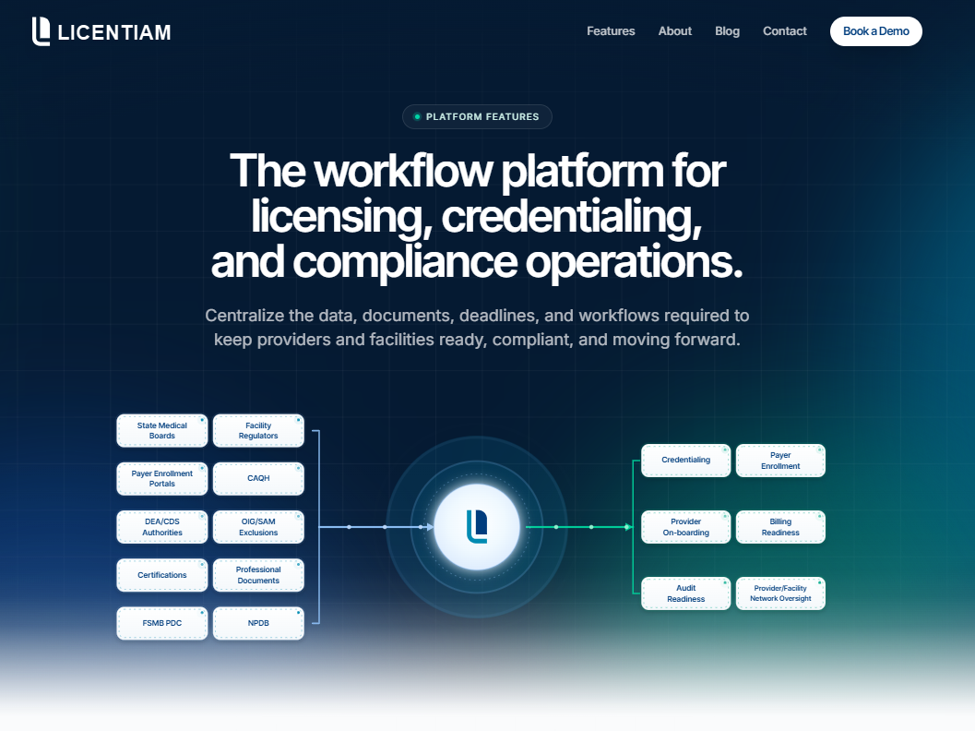
Licentiam combines a secure CRM with tech-enabled services to streamline provider licensing, credentialing, and payer enrollment workflows across all 50 states and U.S. territories.
Teams use Licentiam to centralize documentation, standardize task management, monitor provider status, and stay organized for audits and renewals.
Licentiam also supports ongoing compliance operations with configurable reminders and monitoring workflows to identify and address issues quickly.
Plus, AI-assisted automation capabilities are launching in stages, designed to cut down on manual steps, improve consistency, and speed time to revenue.
Book a demo today to see Licentiam’s platform and delivery model in action.
FAQs About Vendor Credentialing
What is a vendor credential?
A vendor credential is a set of records that shows a vendor meets a facility’s rules. It often includes proof of identity, training records, health checks, and insurance coverage. Hospitals and clinics use vendor credentials to decide whether a vendor may enter the building or work in certain areas.
What is meant by provider credentialing?
Provider credentialing is the process of checking the background, licenses, and work history of healthcare providers. This applies to physicians, nurses, therapists, and other allied healthcare professionals. It confirms that providers meet state, payer, and facility rules before they treat patients or submit claims.
How long does vendor credentialing take?
Vendor credentialing timelines vary depending on document completeness and vendor response times. It may take a few days for pre-vetted vendors or several weeks.
Missing records, expired certifications, and slow approvals are several reasons for delays that can extend the vendor credentialing process.