
Credentialing software helps healthcare organizations manage provider licenses, credentials, renewals, and compliance tasks in one place. This eliminates the need for spreadsheets, emails, and manual follow-ups, which can lead to delays and mistakes.
However, choosing the right credentialing software is not easy. You’ll find many platforms on the market, with varying features, pricing, and quality of support.
This guide explores the top credentialing software options to consider. We’ll also share the key questions you need to ask before investing in one to ensure the right fit.
6 Best Credentialing Software in 2026
Here are the top six credentialing platforms to consider:
1. Licentiam
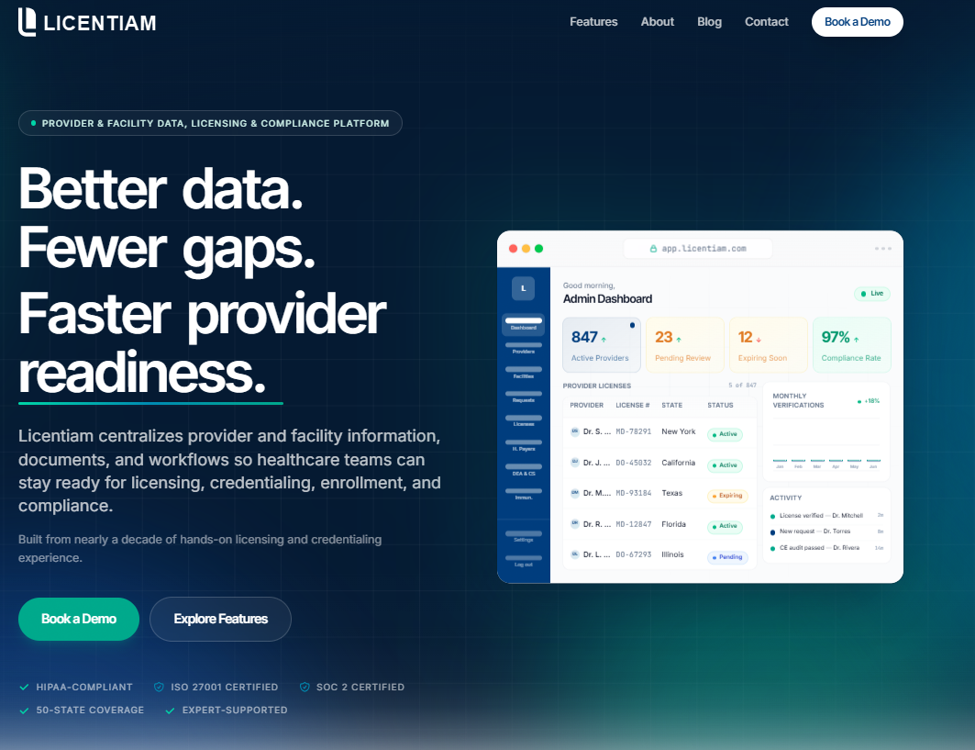
Licentiam is a full-service credentialing software that gets healthcare providers licensed and enrolled faster. It combines a secure CRM with tech-enabled services to simplify licensing, credentialing, and payer enrollment tasks across all 50 U.S. states and territories.
Teams use Licentiam’s document repository to centralize provider data and eliminate paper-heavy, manual processes.
The platform also supports state license expiration tracking for doctors of medicine (MDs), doctors of osteopathic medicine (DOs), nurse practitioners (NPs), and registered nurses (RNs). That improves visibility across provider status and helps you maintain regulatory compliance.
Meanwhile, OIG exclusion monitoring ensures that healthcare providers are not excluded from billing Medicare and Medicaid. This protects your cash flow, improves patient safety, and helps you avoid penalties.
Plus, Licentiam is introducing AI-assisted automation through a phased rollout to cut down on manual steps, enhance consistency, and speed time to revenue.
Schedule a demo today to see Licentiam’s platform and delivery model in action!
Key Features
- License tracking and renewal reminders: Stay on top of license status and renewal timelines across all healthcare providers.
- Secure document repository: Quickly access provider documents, supporting files, and notes for audits and renewals.
- Primary source verifications: Credential verification assistance, documentation tracking, and audit-ready records simplify PSVs.
- OIG exclusion and background checks: Run continuous scans against OIG exclusion lists and validate provider qualifications to meet requirements set by the NPDB and state licensing boards.
- Provider data management CRM: Maintain a single source of truth for different provider types (e.g., MDs, DOs, NPs, RNs).
- CEU management: Monitor continuing education units required for professional license renewals.
- Compliance notifications: Receive configurable alerts for expirations, submissions, and compliance tasks to avoid missed deadlines.
- Audit report generator: Strengthen compliance and leadership visibility with audit-ready reports.
- Client onboarding: Upload provider data to start tracking tasks, status, and documentation.
Book a system demo right now to test Licentiam’s features!
2. Medallion
Source: Medallion.co
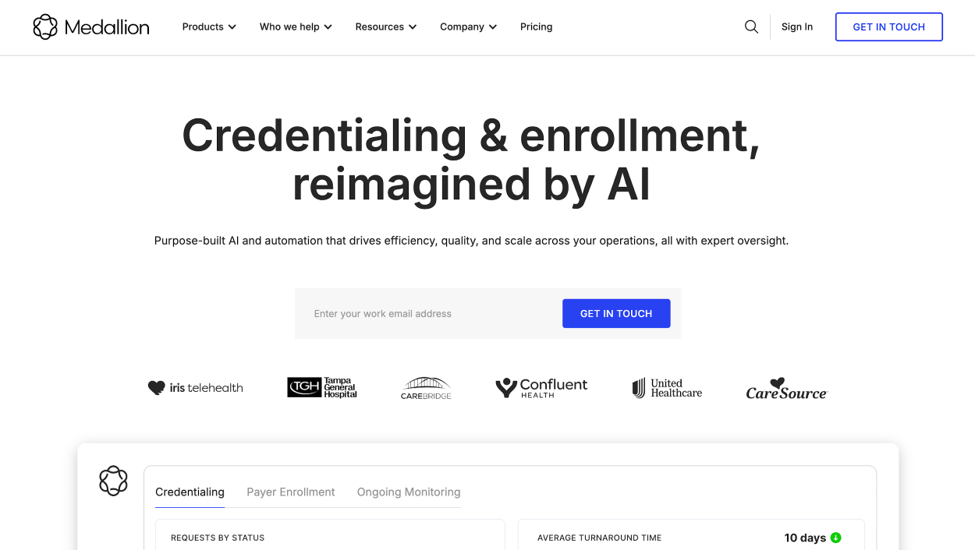
Medallion is a provider credentialing software designed to improve operational efficiency. It uses AI with expert oversight to help organizations complete credentialing and provider enrollment tasks faster.
It can automatically collect provider data, verify details through PSVs, and send payer follow-ups in the background. This reduces manual tasks and human errors, saving valuable time on rework.
With Medallion, providers only submit their documents once, even if they’re active across multiple participating payers. That eliminates repetitive data entry and simplifies the entire process for both practitioners and health plans.
The platform even helps your internal credentialing team stay on top of license expirations. It sends proactive notifications, so your organization can easily maintain compliance.
Key Features
- Automated PSVs: Run primary source verifications without manual tracking.
- One-click data syncing: Update credentialing data across workflows with a single click.
- Instant follow-ups: Send automatic requests when provider documents are missing.
- License expiration tracking: Monitor license expiration dates and receive proactive reminders.
- Direct or delegated payer enrollment: Handle all provider credentialing in-house or delegate enrollment tasks to Medallion’s experts.
3. symplr
Source: symplr.com
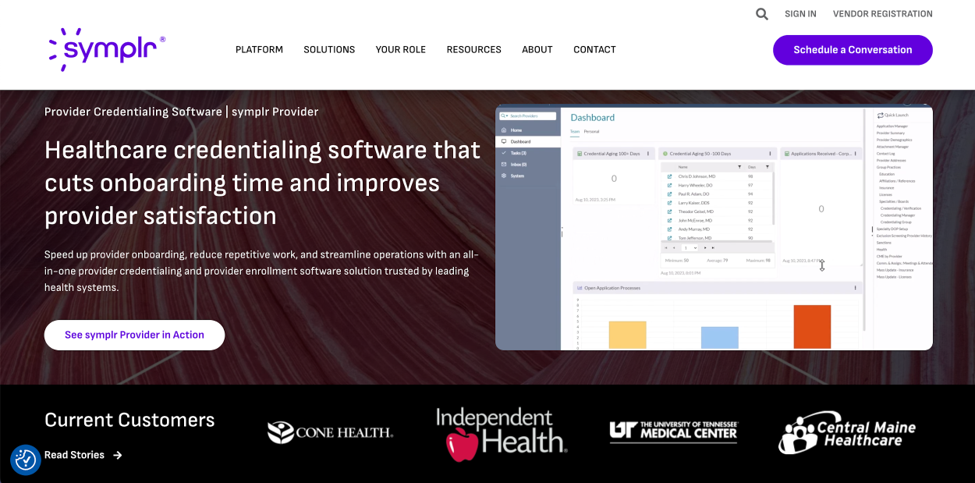
Symplr’s all-in-one healthcare credentialing software helps organizations manage the tedious process of verifying and enrolling providers.
It features automated workflows that eliminate bottlenecks across the entire provider lifecycle. Meanwhile, a centralized provider data repository replaces spreadsheets and manual handoffs.
The platform relies on primary sources and regulatory databases to confirm credentials. Then, it automatically routes applications, alerts, and tasks. This reduces costly delays and administrative burden on your internal credentialing team.
Symplr also integrates OPPE (Ongoing Professional Practice Evaluation), FPPE (Focused Professional Practice Evaluation), and peer review with privileges. That makes it easier to benchmark and report on practitioner performance.
On top of these capabilities, the software tracks the enrollment process and updates roster templates in real time.
Key Features
- End-to-end lifecycle management: Handle initial application, credentialing, privileging, enrollment, and ongoing monitoring in one system.
- Credentialing automation: Data collection and primary source verifications happen automatically to shorten credentialing timelines.
- Performance insights: Unify credentialing, privileging, and quality data to improve decision-making.
- Provider enrollment: Track providers through the enrollment process and create rosters that include added, deleted, and changed data.
- Reporting tool: Generate ad hoc queries and custom reports within minutes.
4. Mocingbird
Source: Mocingbird.com
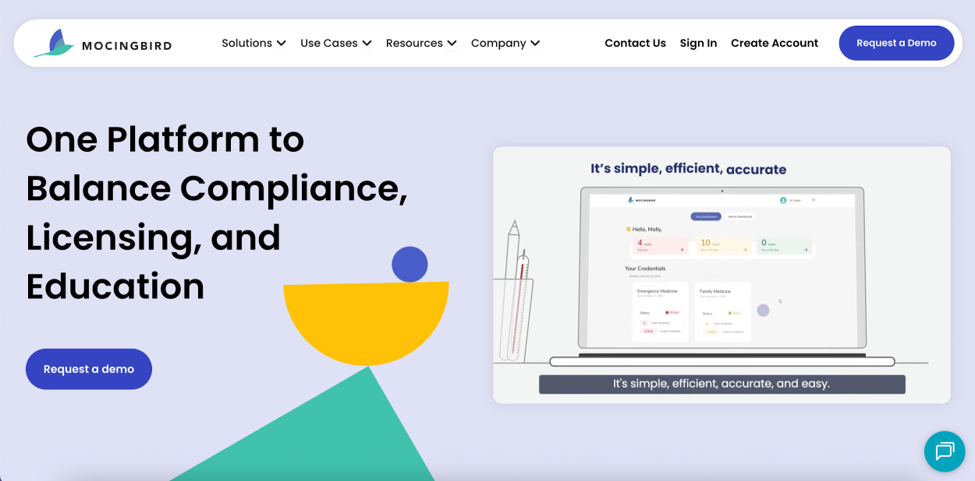
Mocingbird offers a unified platform to manage credentialing, licensing, compliance, and continuing education without switching between different systems.
It automatically tracks deadlines, reminders, and state-specific criteria to eliminate guesswork and reduce errors. Clinicians and healthcare organizations stay on top of professional requirements without manual oversight.
The platform also monitors licensing and certification progress in real time. It eliminates delays and supports faster provider onboarding.
For centralized visibility, Mocingbird has a secure hub that holds all provider records. Internal staff can access important documents and training records anytime, anywhere.
Mocingbird even provides access to a curated learning center. This includes accredited courses that match clinicians’ specialties and state requirements.
Key Features
- Automatic requirement tracking: Stay ahead of professional requirements and state-specific criteria.
- Application status monitoring: Know where each application stands in real time.
- File cabinet: Store provider data in a cloud-based document hub.
- Built-in learning center: Access curated CME options from accredited providers.
- Administrator dashboard: Track compliance status and address gaps proactively.
5. CredentialStream
Source: HealthStream.com
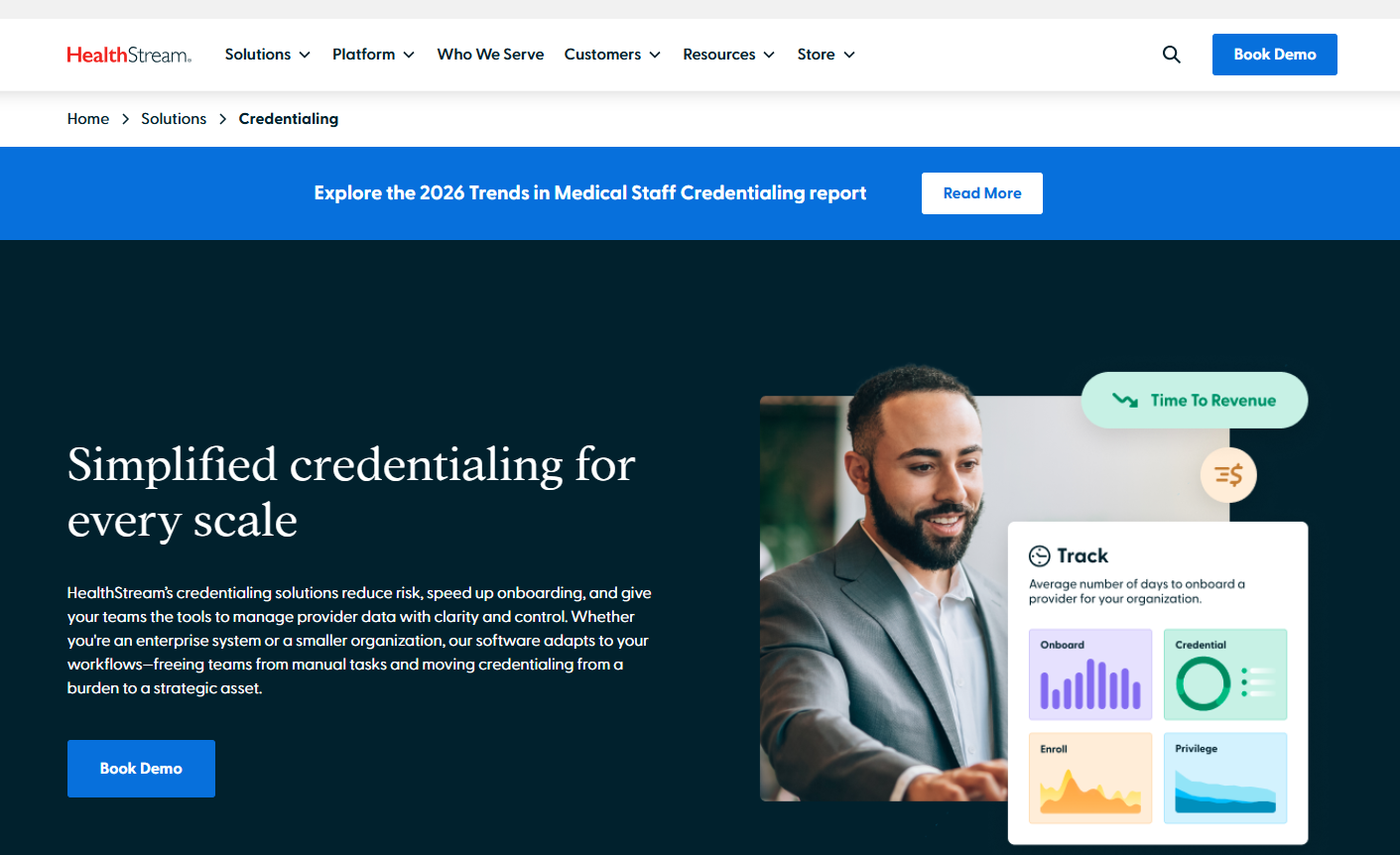
CredentialStream is a medical credentialing software that helps healthcare organizations streamline verification, enrollment, and privileging.
Intelligent workflows and mobile collaboration tools make it easier to onboard providers so they can see patients sooner.
Meanwhile, a self-service portal enables practitioners to submit their documents and applications. The software automatically schedules initial appointments or conducts the re-credentialing process.
CredentialStream also stands out for its intuitive dashboard that provides real-time visibility into license status and decisions. This eliminates manual back-and-forth and delays.
Plus, it provides access to a library of performance metrics and appointment packet templates. These help in operational benchmarking.
Key Features
- Automated workflows and approvals: Route applications and verifications through predefined steps for faster provider onboarding.
- Centralized data management: Maintain a single source of truth across your healthcare organization.
- Collaboration hub: Providers, chairs, and medical staff professionals (MSPs) see what’s happening in real time and where to act.
- Self-service portal: Let providers submit information, book initial appointments, track their status, or initiate the re-credentialing process without burdening your internal team.
- Extensive integrations: Connect CredentialStream with other HealthStream systems for real-time interoperability.
6. Axuall
Source: Axuall.com
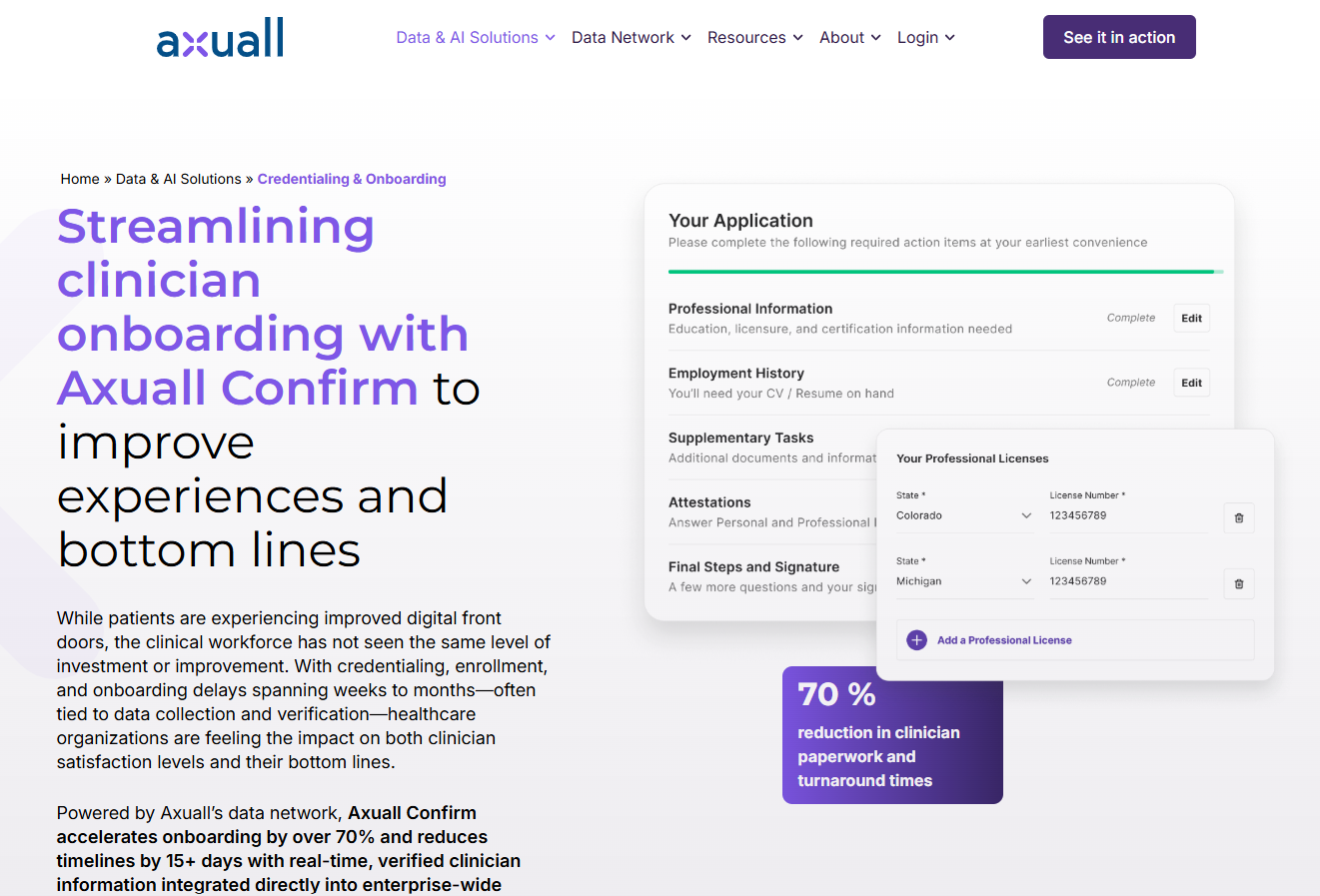
Axuall is a credentialing solution built around a shared provider data network. Instead of collecting the same information repeatedly, the software lets organizations access verified data that’s updated in real time.
It puts actionable insights and up-to-date information in the hands of decision-makers. This eliminates paperwork and reduces turnaround times.
Axuall also provides workforce analytics through a user-friendly clinician population browser. It helps leaders understand their workforce, compare performance against peers, and identify resources that can be redeployed for better patient care.
Meanwhile, a digital wallet allows clinicians to manage their own credentials, career information, and forms. They no longer need to manually enter details when applying to a new job. Axuall quickly shares their data with leading CRM, credentialing, and workforce management platforms.
Key Features
- Provider data network: Tap into Axuall’s extensive network that connects your organization to thousands of primary source verifications and data partners.
- Clinician population browser: Unlock comprehensive workforce insights to improve staffing decisions.
- Digital wallet: Allow clinicians to store and share verified credentials without manual data entry.
- AI-powered insights: Analyze provider data to highlight gaps and compliance risks.
- API documentation support: Connect Axuall data with internal systems through APIs.
Important Questions to Ask When Evaluating Credentialing Software
Many healthcare organizations struggle to choose the best credentialing software for their needs. To ensure the right fit, it’s important to ask the following questions.
How Does the Platform Streamline Credentialing Processes?
Before investing in a credentialing solution, you should see how tasks move from start to finish and where automation steps in.
The right software must be able to guide your credentialing staff through applications, renewals, and reviews in a clear order.
At the same time, it should handle the more tedious tasks for your internal team, so they can focus on more important activities.
How Much Will the Software Cost?
The cost is always among the most important factors to consider when evaluating different credentialing platforms.
It’s important to look beyond the monthly fee. You should also calculate setup fees, user limits, add-ons, and support costs, all of which can quickly add up.
You also want to know what features come standard versus paid upgrades. Transparent pricing helps you avoid surprises later and compare tools fairly based on value, not just entry price.
What’s the Expected Return on Investment (ROI)?
You want to know how the credentialing software saves time, reduces rework, or improves compliance.
Ask vendors to explain how the platform reduces delays or automates repetitive tasks that waste hours. Request clear case studies when available.
Knowing the software’s ROI helps you justify the purchase to leadership using time, staffing, or revenue impact.
Can It Integrate with Other Systems?
Credentialing experts rarely use a single tool for their work. Extensive integrations reduce data silos and duplicate work across various departments.
You should invest in a credentialing platform that integrates with your HR, revenue cycle management (RCM), EHR, and provider data systems.
Will the Platform Scale with Growth?
Choose credentialing software that can handle more providers, locations, and roles over time. Check how it performs with higher data volume and added complexity.
Scalable software reduces the need to switch to another system as your healthcare organization grows.
How Secure Is the Credentialing Software?
You will upload, store, and manage sensitive provider information in a credentialing platform.
You should ensure it is secure and meets industry standards in data privacy to avoid non-compliance violations.
Look for strict access controls, data encryption, audit trails, and multi-factor authentication.
Get Providers Licensed and Credentialed Faster with Licentiam
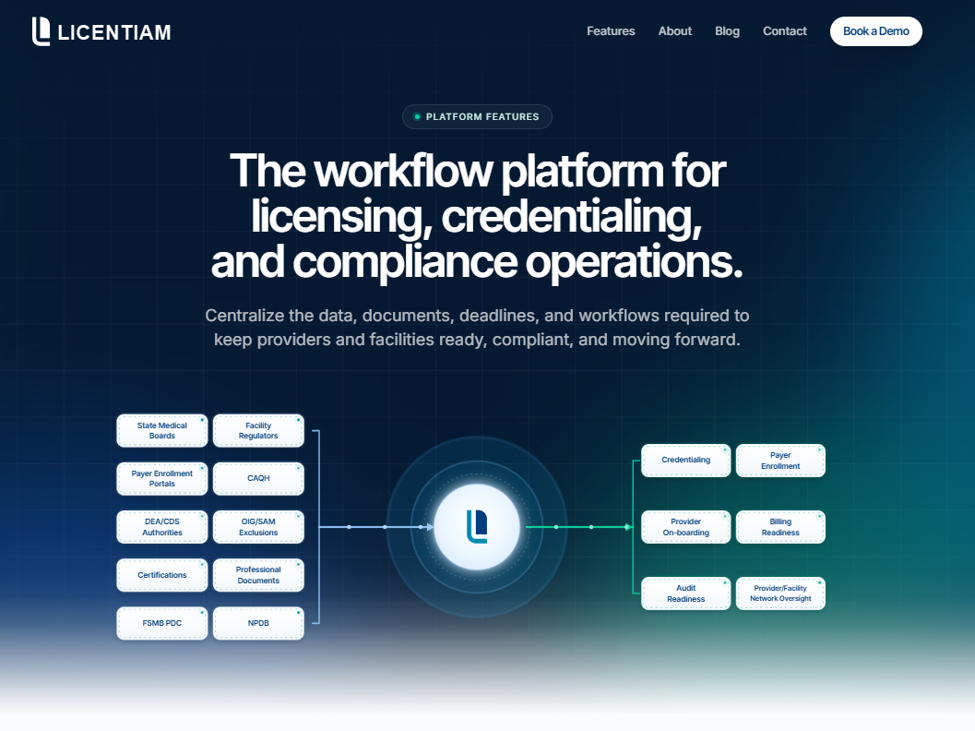
Licentiam integrates CRM software with tech-enabled services to simplify provider licensing, credentialing, and payer enrollment workflows across all 50 states and U.S. territories.
The platform offers built-in license monitoring, secure document repository, OIG exclusion and background checks, PSVs, CEU management, and audit-ready reports. These features empower teams to centralize documentation, standardize processes, and stay prepared for audits.
Licentiam is also developing and releasing AI-assisted automation capabilities to reduce manual work, ensure consistency, and accelerate time to revenue.
In fact, Licentiam’s team and platform helped clients track and validate provider credentials to ensure compliance with state medical boards and insurance payer requirements.
Over the first six months of engagement, Licentiam saved 3,500+ hours of administrative time, allowing teams to focus on patient care and revenue generation.
Request a demo today to learn how Licentiam simplifies operations!
FAQs About Credentialing Software
What is the best credentialing software?
The best credentialing solutions are Licentiam, Medallion, symplr, Mocingbird, CredentialStream, and Axuall. All platforms deliver accurate credentialing, streamlined workflows, and real-time visibility into compliance.
How much does credentialing software cost?
The actual cost of credentialing software varies greatly, with most platforms following a basic subscription model. However, some providers charge per provider for specific tasks, such as application submissions or enrollment status tracking.
What is healthcare credentialing software?
Healthcare credentialing software helps organizations manage provider licenses, credentials, and committee reviews in one system. It supports faster provider onboarding, renewals, and audits while reducing manual tracking and missing documents. These tools keep providers active and billing-ready, which protects revenue.