
Compliance is one of the most important responsibilities of healthcare organizations. As a clinic or hospital, you should follow strict rules to protect patient data, support safe care, and meet legal standards.
However, managing compliance is difficult due to complex and ever-changing healthcare regulations.
Plus, if you still track every task, document, and deadline through spreadsheets or emails, you’re more likely to make a mistake or forget an important step. These errors lead to costly fines, legal action, and operational disruptions.
Healthcare compliance software solves these challenges by helping you track requirements, manage risks, and store records in one place.
This article lists the best healthcare compliance solutions by use case. We’ll also discuss their importance and the key features to look for.
What Is Healthcare Compliance Software?
Healthcare compliance software is a digital tool that helps healthcare organizations manage rules, policies, and actions tied to regulatory standards. It can track compliance tasks, centralize documentation, and identify gaps without relying on paperwork or spreadsheets.
It’s a broad category because healthcare compliance covers many areas. These include provider credentialing, medical staff licensing, employee training, billing, patient data privacy, and more. Each area has its own requirements and workflows, which is why compliance platforms vary a lot.
Some tools streamline licensure and renewals, while others focus on incident management, risk assessment, or audit preparation.
Most compliance teams in the healthcare industry combine a few tools to address their specific needs. This approach reduces repetitive work and makes it easier to meet regulatory requirements.
Top 6 Healthcare Compliance Software for Different Use Cases
Here are the best compliance software specifically designed for the healthcare sector. We’ll break down the tools based on the specific compliance tasks you need to handle.
1. Licentiam for Credentialing and Licensing
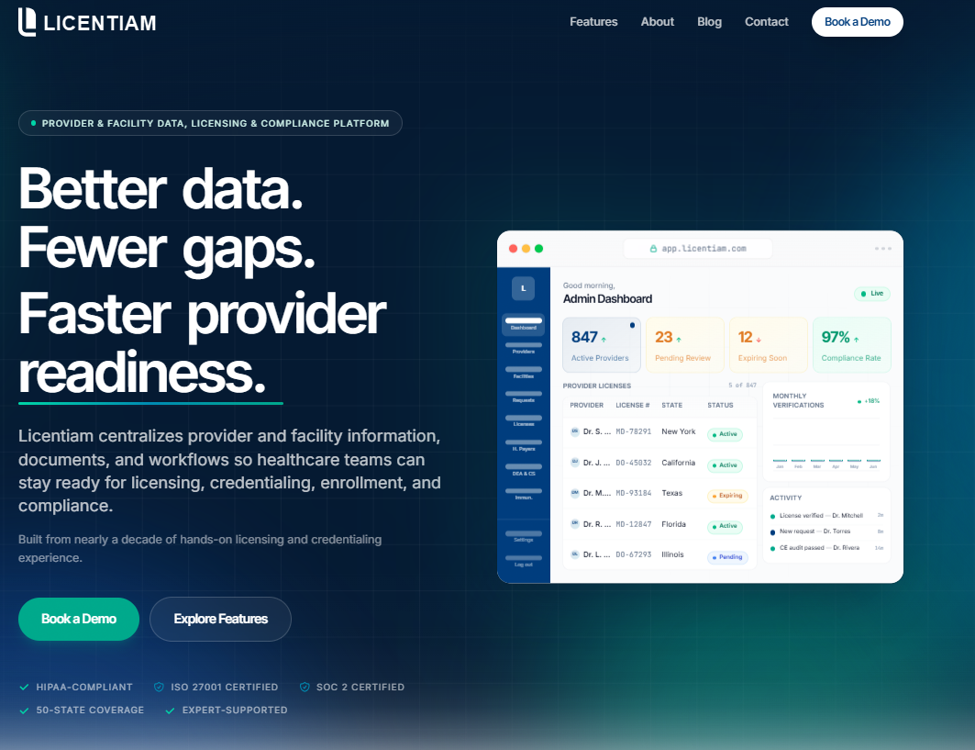
Licentiam is built on an existing, production-tested compliance CRM platform that offers tech-enabled services to streamline provider credentialing, licensing, and payer enrollment in all 50 states and U.S. territories.
Teams use Licentiam to centralize documentation, improve visibility into provider status, track renewal timelines, and stay organized for compliance audits.
Licentiam also features configurable reminders and monitoring workflows for renewals and screening cadence. These help teams identify issues early and improve audit readiness to support ongoing compliance operations.
Plus, Licentiam is introducing AI-assisted automation capabilities through a phased rollout, designed to cut down manual tasks, accelerate time to revenue, and ensure compliance.
Key Features
- License tracking and renewal reminders: Conduct ongoing monitoring of state license status, renewal deadlines, and required documentation for different healthcare providers.
- Compliance alerts: Stay on top of expirations, applicable submissions, and compliance activities with configurable reminders.
- Secure document repository: Store provider data, audit documents, and notes in one place for faster retrieval during audits and re-credentialing.
- Primary source verifications: Streamline PSVs through credential verification assistance, document management, and audit-ready records.
- OIG exclusion and background checks: Proactively screen providers against OIG exclusion lists and verify the providers’ qualifications to meet compliance requirements of the National Practitioner Data Bank or state licensing boards.
- CEU management: Track and manage CEUs required for professional license renewals.
- Reporting tool: Generate audit-ready reports and operational dashboards to support compliance and leadership visibility.
- Client onboarding: Onboarding workflows centralize provider data and immediately enable task, status, and document tracking.
Book a short intro call to see Licentiam’s features and delivery model in action.
2. MedTrainer for Compliance Training
Source: MedTrainer.com
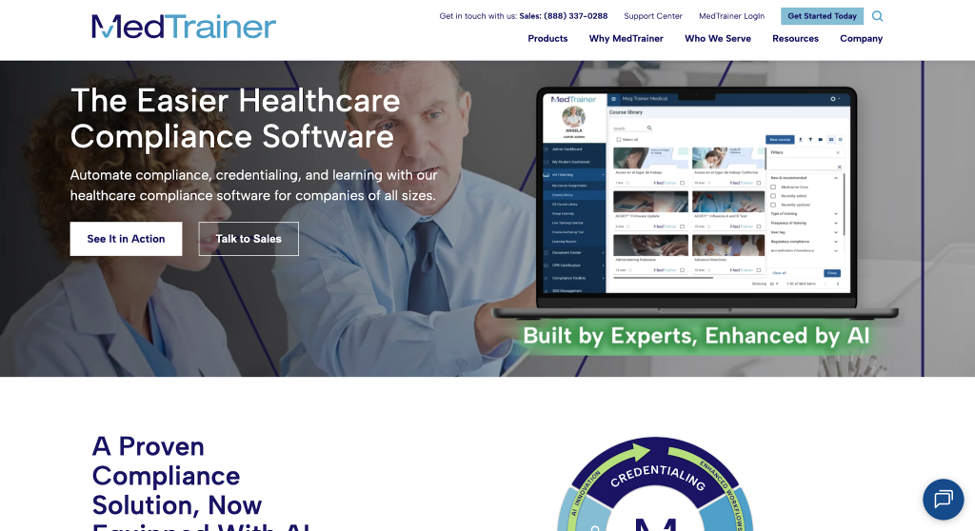
MedTrainer supports healthcare regulatory compliance through its learning management system (LMS), backed by subject-matter experts and a team of researchers.
It provides access to 1,000+ training materials that cover complex compliance requirements. These include the Health Insurance Portability and Accountability Act (HIPAA), the Occupational Safety and Health Administration (OSHA), and the Health Resources and Services Administration (HRSA).
MedTrainer also offers continuing education credits and premium certifications to streamline employee training. There’s even an option to build a custom compliance program using the intuitive authoring tool.
Reporting dashboards show completion rates, confirm upcoming healthcare training, and monitor clinician training hours. These support ongoing survey readiness and stronger compliance management with less manual effort.
MedTrainer also has a built-in AI assistant to answer your compliance questions, list training requirements, and cite the specific regulation.
Key Features
- Learning management system: Healthcare training and education tools ensure compliance, cut down manual processes, and keep teams audit-ready.
- Extensive course library: Access healthcare-specific courses on HIPAA, OSHA, and other regulatory standards. Alternatively, develop tailored training materials using a custom course authoring tool.
- Smart reporting: Generate detailed reports to show training completion and compliance gaps.
- AI assistant: Artificial intelligence answers questions and links to specific regulations to guide compliance training.
- HRIS integrations: Connect MedTrainer to leading HRIS to automate new hire onboarding and jumpstart training.
3. MDaudit for Billing Compliance
Source: MDaudit.com
MDaudit ensures billing compliance, coding quality, and revenue integrity for healthcare organizations. It combines workflow automation, risk monitoring, built-in analytics, and benchmarking capabilities in a single cloud-based platform.
By automating the audit process, MDaudit helps identify the root cause of errors and implement corrective actions in real time. This mitigates regulatory risks and reduces manual tasks for compliance officers.
The platform also provides analytical insights on compliance gaps and audit efficiencies to prevent future claim denials.
Plus, MDaudit’s benchmarking tools enable compliance leaders to compare their organization’s risk levels to peers. These reveal opportunities that will improve revenue and establish risk-based auditing practices.
Key Features
- Automated audits: Run compliance audits, continuous risk monitoring, and anomaly detection without manual oversight.
- AI-powered insights: AI transforms healthcare financial data, claims, denial remittances, and audit results into actionable insights.
- Benchmarking capabilities: Compare billing and coding performance against peer data to support informed decision-making.
- Integrated workflows: Connect risk analysis, rectification, and corrective actions in a closed-loop process.
- Revenue integrity suite: Analyze historical data to prevent denials and protect cash flow.
4. Healthicity for Audit and Reporting
Source: Healthicity.com
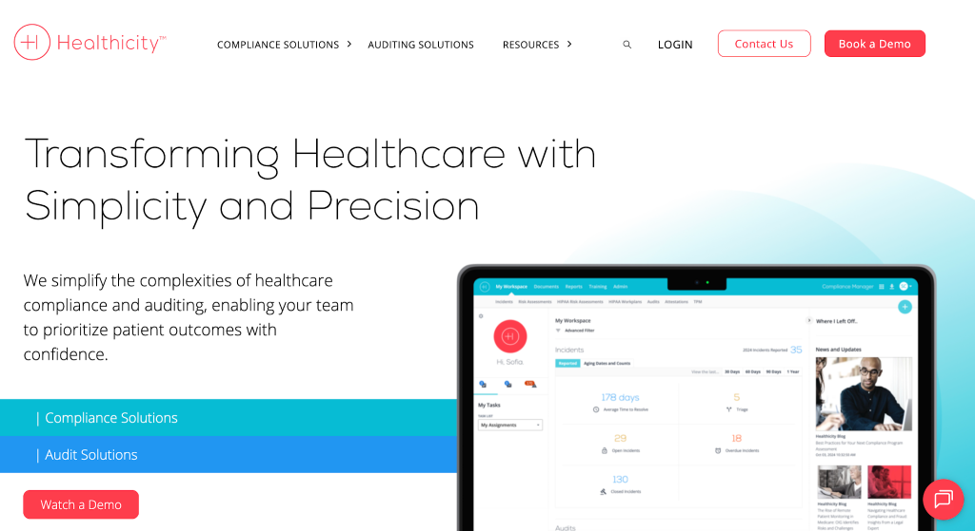
Healthicity’s Compliance Manager helps healthcare organizations manage audits and compliance matters in a user-friendly platform.
It features a customizable workspace and real-time reporting to address specific compliance challenges.
Teams use Healthicity to investigate incidents, conduct risk assessments, train employees, or increase third-party oversight.
The platform can also automate internal and external audit management, making it easier to track every task, deadline, and result.
Meanwhile, exclusion monitoring capabilities protect healthcare organizations from costly fines and penalties. It automatically screens employees and vendors against all state and federal exclusion lists to ensure compliance.
Key Features
- Dashboard reporting: Customize Healthicity’s workspace to simplify compliance management and oversee everything from one platform.
- Incident management and reporting hotline: Enable employees to report incidents 24/7 via phone or web for quicker resolution.
- Risk assessment: Identify vulnerabilities and implement corrective actions to mitigate risks.
- Automated audits: Internal and external audits run automatically to provide real-time visibility into the entire compliance lifecycle.
- Exclusion monitoring: Screen employees and vendors against industry standards to avoid non-compliance penalties.
5. Cority for Employee Health Management
Source: Cority.com
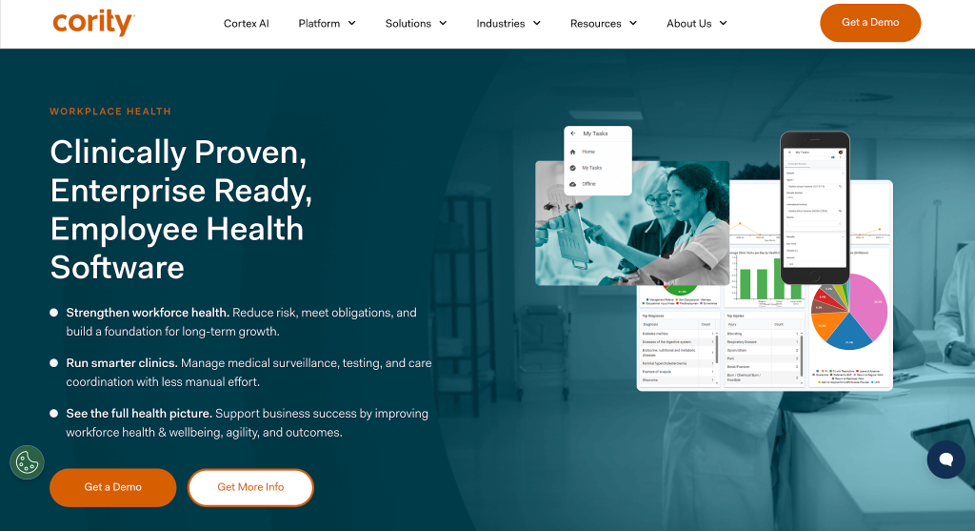
Cority is a leading healthcare compliance software provider that focuses on improving employee health, reducing risks, and strengthening business performance.
It supports safer, healthier employees by combining effective healthcare compliance programs with coordinated hygiene and ergonomics plans.
Leadership can track mental health, launch wellness initiatives, and provide early intervention support to keep staff healthy and engaged.
Audit-ready records meet clinical compliance requirements set by the Joint Commission, OSHA, and other regulatory bodies.
Cority can even monitor chemical, physical, and biological exposure levels to maintain compliance and employee safety.
Key Features
- Employee health programs: Centralize tracking of health checks, surveillance, and wellness initiatives for staff.
- Medical surveillance: Automate scheduling, testing, prescriptions, vaccinations, and reporting for occupational health monitoring.
- Audit-ready documentation: Organize and maintain employee records that meet various regulatory standards.
- Case management: Manage health cases from intake through follow-up with structured workflows.
- Industrial exposure monitoring: Assess exposure levels and related health data to meet regulatory compliance.
6. Paubox for Secure Communication
Source: Paubox.com
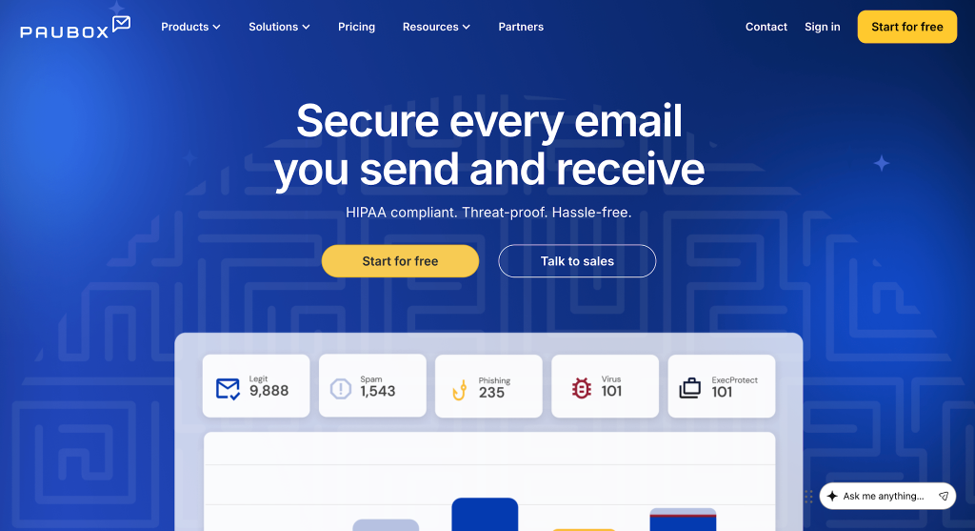
Paubox protects personal health information and other sensitive data by offering a HIPAA-secure email suite. It uses automatic data encryption, so teams never have to click a button or add a tag.
Paubox also seamlessly integrates with Google Workspace or Microsoft 365. It doesn’t require additional apps or plugins to send messages using your existing email account.
Meanwhile, generative AI strengthens data security by detecting and blocking advanced threats. These include phishing, spoofing, and malware.
Paubox even offers email archiving that quietly works in the background. This helps you face compliance audits with confidence.
Key Features
- Automatic email encryption: Every email is encrypted by default, so data stays protected all the time.
- AI-powered data protection: AI-driven threat detection stops phishing, spoofing, and malware before they reach inboxes.
- Native integrations: Paubox works directly with Google Workspace or Microsoft 365 without new workflows or plugins.
- Unlimited email archiving: Store all inbound and outbound email in U.S.-based cloud servers for compliance purposes.
- HIPAA-compliant design: The platform is certified by HITRUST and includes a signed business associate agreement (BAA).
Why Do You Need Healthcare Compliance Software?
Here are the reasons why you need to invest in the right healthcare compliance software.
Mitigate Compliance Risks
Healthcare compliance platforms reduce risk by replacing manual tracking with clear, documented processes.
Instead of relying on emails or spreadsheets, your team can follow standardized workflows that log actions as they happen. This reduces missed deadlines, compliance gaps, and unclear ownership.
The platform also helps you align daily tasks with your healthcare organization’s compliance requirements, so nothing falls through the cracks. When issues arise, you can trace what happened, who is responsible, and when.
Ensure Patient Safety
Patient safety depends on medical staff following internal policies, having the right licenses, completing required training, and reporting issues on time.
Healthcare compliance software helps you manage these activities in one place. You can screen providers against regulatory standards, track training progress, document incidents, and monitor resolutions without delays.
The compliance system also allows your employees to report safety issues, so the relevant teams can respond faster.
Centralize Compliance Management
Compliance tasks often live in many systems, which makes oversight difficult.
Healthcare compliance software brings policies, reports, audits, and records into one platform. This gives both leadership and staff a clear view of tasks, deadlines, and open issues.
Teams spend less time searching for files and more time completing required work, which improves operational efficiency.
Centralized management also supports consistent processes and reduces confusion between different teams.
Improve Audit Readiness
Healthcare compliance tools store documentation as soon as work is completed. This creates a reliable history of audits, reviews, and corrections.
When an audit request comes in, your team can pull reports without scrambling.
Reporting dashboards also show your current compliance status, so you know where gaps exist before an auditor points them out.
Promote Accountability
Healthcare compliance software assigns tasks to specific roles and tracks progress over time. Staff know their responsibilities, and leaders can see when work is late or incomplete.
This visibility enhances accountability and prevents compliance from becoming an afterthought.
Key Features to Look for in Healthcare Compliance Software
Consider these features when evaluating different compliance solutions:
HIPAA Compliance
HIPAA support is a key feature of healthcare compliance software.
Look for strict access controls, audit logs, and encrypted storage to protect sensitive patient data.
You should also sign a BAA with the software vendor, so they are legally required to keep sensitive information private.
Policy Management
Policy management features store all compliance policies in one system, allowing for quick access, version control, and real-time tracking.
You should also choose compliance software that accepts e-signatures to record staff acknowledgment of policies.
Incident Reporting and Case Management
Make sure the compliance software enables your staff to report issues quickly, whether through a secure portal or a dedicated hotline.
Then, look for case management tools to resolve incidents, conduct follow-ups, and track outcomes.
Proactive Risk Management
The right software helps you identify and track potential compliance gaps before they lead to serious consequences.
Invest in tools with automated alerts and tracking so you can stay ahead of issues and reduce the risk of fines.
Reporting and Analytics
Reporting tools turn complex data into clear summaries for leadership teams and staff. Meanwhile, analytics provide insights into problem areas to support informed decision-making.
Look for healthcare compliance software that lets you generate custom reports. Dashboards are also useful to show open tasks, overdue items, and trends.
Employee Training and Learning Management
With the right compliance software, you can assign courses that keep your staff educated on policies, procedures, and new regulations.
Make sure you can monitor training progress, manage continuing education units, and receive automated reminders for refresher courses.
Integration Capabilities
Choose healthcare compliance software that connects to your existing systems, such as electronic health records and HRIS.
Seamless integrations reduce duplicate data entry and keep records in sync, which can streamline compliance workflows.
Licentiam Supports Ongoing Healthcare Compliance
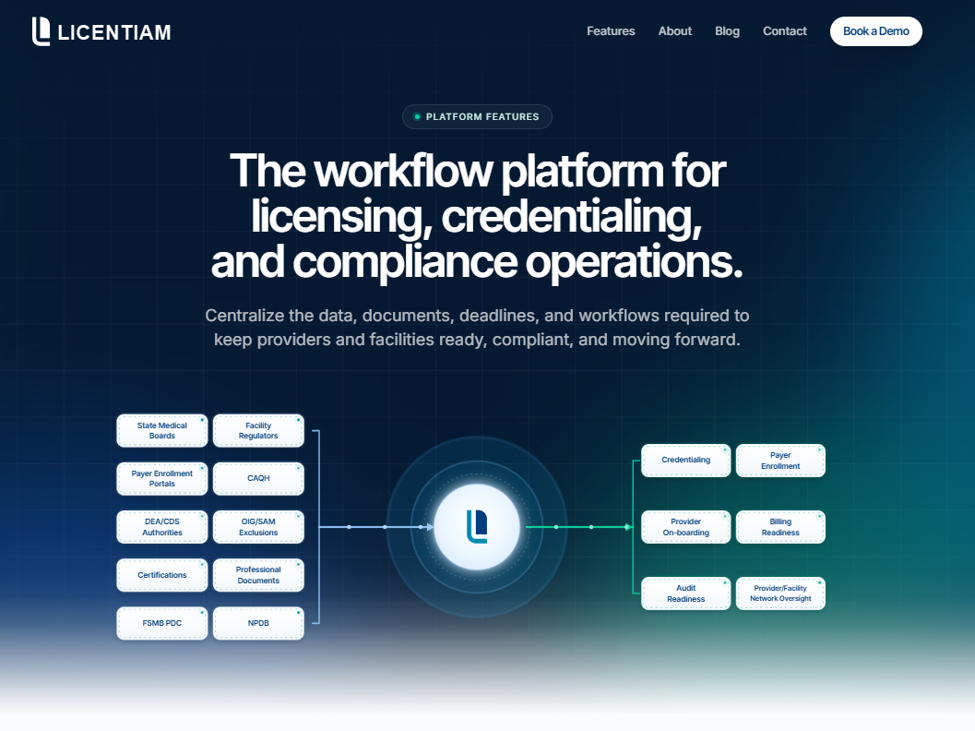
Licentiam is a CRM platform and tech-enabled services partner that supports healthcare compliance through configurable alerts and continuous monitoring workflows.
Teams use Licentiam to identify compliance issues, centralize documentation, and stay organized for audits and license renewals.
Beyond compliance tracking, Licentiam also streamlines provider credentialing, licensing, and payer enrollment workflows in all 50 states and U.S. territories.
AI-assisted automation capabilities are also being developed and released in phases, designed to reduce manual steps, improve consistency, and speed time to revenue.
Book a demo today to learn how Licentiam streamlines healthcare compliance management.
FAQs About Healthcare Compliance Software
What is the best healthcare compliance software?
The best healthcare compliance software depends on your specific compliance needs. Some tools focus on credentialing, while others specialize in billing, audits, or data security. Many clinics and hospitals use more than one system to address their biggest compliance gaps.
Is healthcare compliance software required by law?
Healthcare laws do not require specific software, but they need proof of compliance. Software helps you document policies, training, audits, and actions in one place. Without it, meeting regulatory expectations and responding to audits can be much harder and more time-consuming.
How much does healthcare compliance software cost?
The cost of healthcare compliance software varies based on features included, users, and organization size. Some tools charge per user, while others use flat or subscription-based pricing. Smaller clinics may pay less, while large hospitals often invest more in advanced tools and compliance support.