
Running a hospital or any healthcare organization means more than providing care. You also need to follow many rules that control how you handle patient data, bill for services, train staff, and maintain safety.
When you overlook these laws and regulations, the results can be costly and stressful. You might be subject to fines and legal trouble.
This article breaks down the most common healthcare compliance issues you should avoid. We’ll also share the best practices you can implement to maintain regulatory compliance.
1. HIPAA Violations and Data Breaches
Meeting the standards of the Health Insurance Portability and Accountability Act (HIPAA) remains one of the most serious compliance challenges in the healthcare sector.
HIPAA sets strict rules for how healthcare organizations should handle patient data. They must keep protected health information (PHI) private and secure at all times.
However, most organizations have weak passwords and shared logins to healthcare technology solutions like EHR (electronic health record) systems. Poor data protection controls make it easier for security breaches to occur.
HIPAA violations also happen when internal staff access records they do not need, use unsecured devices, or send patient information to third-party vendors or business associates without permission.
All of these can compromise data privacy, which subjects organizations to hefty fines.
2. Expired Licenses for Healthcare Providers
Licenses show that a healthcare professional has the necessary training and qualifications to deliver care and protect patient safety. They confirm that doctors, nurses, and other medical staff meet regulatory requirements set by state boards and oversight groups.
Allowing healthcare providers to work with expired licenses is a common but serious compliance issue. This often occurs when renewal dates are not tracked, roles are unclear, or manual systems fail. Regulators may view this as neglect, even if it was unintentional.
Staff turnover can also cause license checks to fall behind. When organizations need to fill positions quickly, they may rush credentialing and onboarding to avoid care delays. This can lead to skipped or incomplete license reviews, which increases the chance of compliance violations tied to expired or missing credentials.
The consequences of expired licenses can be severe. You may be forced to pause services, reschedule patients, or get denied for reimbursements from federal healthcare programs.
3. Billing and Coding Errors
Billing and coding errors happen when healthcare services are not recorded or billed the right way. Common mistakes include undercoding, overcoding, duplicate billing, and missing details in patient records.
These errors often come from poor staff training, unclear rules, or outdated billing systems that do not match current coding standards.
Another cause is the pressure on providers or billing teams to increase revenue. In some cases, they deliberately upcode or bill medical services at higher levels than what was delivered. Even when done without bad intent, this behavior can still violate billing rules and trigger audits.
Billing errors can also result from criminal activity. Fraudsters who gain access to patient records through hacking may submit fake and expensive claims. Some will even set up ghost clinics using stolen provider details or open billing accounts in the name of real hospitals.
These actions can cause major financial losses and long investigations that disrupt daily operations.
4. Medicare and Medicaid Non-Compliance
The Centers for Medicare and Medicaid Services (CMS) sets federal regulations for how healthcare organizations manage billing, patient eligibility, documentation, and reporting. They also support civil rights by requiring equal access to healthcare services without discrimination.
However, meeting CMS compliance requirements is among the most significant challenges for healthcare organizations.
Many facilities have incomplete patient records, billing services that do not meet coverage rules, and missing compliance reports, which can lead to non-compliance.
Other issues involve late claim submissions, poor care documentation, and the use of artificial intelligence (AI) without human review or oversight.
When these problems are not addressed, organizations may face audits, delayed payments, fines, or removal from Medicare and Medicaid programs, which can disrupt patient care.
5. Inadequate Staff Training
Many healthcare organizations treat compliance training as a one-time task. New hires may receive basic onboarding, but follow-up training is often skipped.
Over time, rules change, systems update, and staff forget key steps. This gap makes it harder to meet new regulatory standards and maintain ongoing compliance.
When staff are not trained regularly, problems show up across the organization. Employees may mishandle patient records, bill services the wrong way, or fail to follow safety steps. These mistakes can affect care quality and patient safety.
Inadequate training creates possible risks related to audits, fines, and patient complaints. It can also damage trust if patients notice confusion or inconsistent health care.
6. Fraudulent Activities and Referrals
Fraudulent activities often stem from ignoring or misunderstanding rules that control financial relationships in healthcare. Two of the most relevant laws are the Stark Law and the Federal Anti-Kickback Statute.
These laws limit how providers can receive payment or benefits when referring patients for certain designated health services in which they have a financial interest. Their purpose is to keep care decisions based on medical need, not financial gain.
Compliance issues arise when providers accept gifts, payments, or incentives tied to referrals. These actions can violate federal fraud and abuse laws or trigger false claims reviews.
Such issues can shut down medical services during investigations and harm leadership credibility. Public trust also drops quickly when fraud is suspected.
7. Workplace Safety Violations
Many healthcare organizations violate workplace safety rules, which puts both employees and patients at risk.
Common safety issues include poor infection control, the lack of proper protective gear, unsafe medical equipment, and failure to report workplace injuries.
In busy care settings, these problems often happen when teams skip training or fail to follow company policies. Many providers struggle to balance daily care demands with safety checks, which can lead to repeated issues.
Safety failures can lead to shutdowns, inspections, and lawsuits. If they cause serious injury or death, criminal charges may follow.
Consequences of Non-Compliance in the Healthcare Industry
Non-compliance affects every part of your healthcare organization, from finances to patient trust.
- Financial penalties: You may lose millions of dollars annually in fines due to non-compliance in healthcare. Other financial consequences include repayment demands and delayed reimbursements, which can drain revenue and disrupt cash flow.
- Legal action and lawsuits: Healthcare violations can trigger government investigations, civil lawsuits, or criminal cases that place both leadership and staff under legal pressure.
- Reputational damage: Previous compliance issues and complaints can lead to a loss of patient trust. Patients will question the quality and safety of your care. Non-compliance also affects your ability to hire skilled providers, as they want to protect their reputation.
- Operational disruptions: Audits, corrective plans, staff retraining, and service suspensions can slow down daily work and pull focus away from patient care.
Best Practices to Avoid Healthcare Compliance Issues
Follow these best practices to avoid compliance issues and consequences.
Develop Robust Compliance Programs
A strong compliance program with clear written policies provides structure and direction. It supports ongoing compliance efforts and not just one-time tasks. This helps develop a culture of compliance, where everyone in your organization follows rules consistently every time.
Make sure the leadership team also supports the program because their attitude can affect other staff.
Conduct Regular Compliance Audits and Risk Assessments
Compliance and risk assessments help you identify gaps in billing, training, documentation, or safety practices. This supports better risk management and helps teams focus on high-risk areas first.
Schedule these assessments every quarter or at least twice a year. Doing so makes it easier to determine the root causes of compliance issues and address them before they lead to severe violations.
Strengthen Data Security Measures
Protecting patient privacy is a key part of compliance in healthcare. Implement strong access controls to limit who can view and share protected health information.
You should also use encrypted systems that require multi-factor authentication (MFA) to prevent fraud and phishing of sensitive patient data.
Don’t forget to review access logs regularly to spot suspicious activities that can lead to data breaches.
Consider CVOs or Credentialing Software
Credentialing services and software help track licenses, renewals, and provider data in one place. They reduce manual errors and support regular monitoring of staff credentials.
These tools also help organizations keep up with regulatory changes that affect provider approval and participation in government care programs.
Standardize Medical Billing Practices
Standard billing rules reduce confusion and errors. Clear workflows and updated coding guidelines help billing teams stay consistent and avoid errors.
Consistency also ensures compliance with payer rules and government program requirements. It protects your healthcare organization from avoidable billing disputes.
Provide Ongoing Employee Training
Ongoing training keeps your staff aware of new regulations and policy updates. Training should reflect regulatory changes and real issues seen in audits or incidents.
Implement role-based training to ensure teams apply rules correctly in daily tasks. This approach reduces repeat errors and confusion across departments.
Licentiam Supports Ongoing Healthcare Compliance
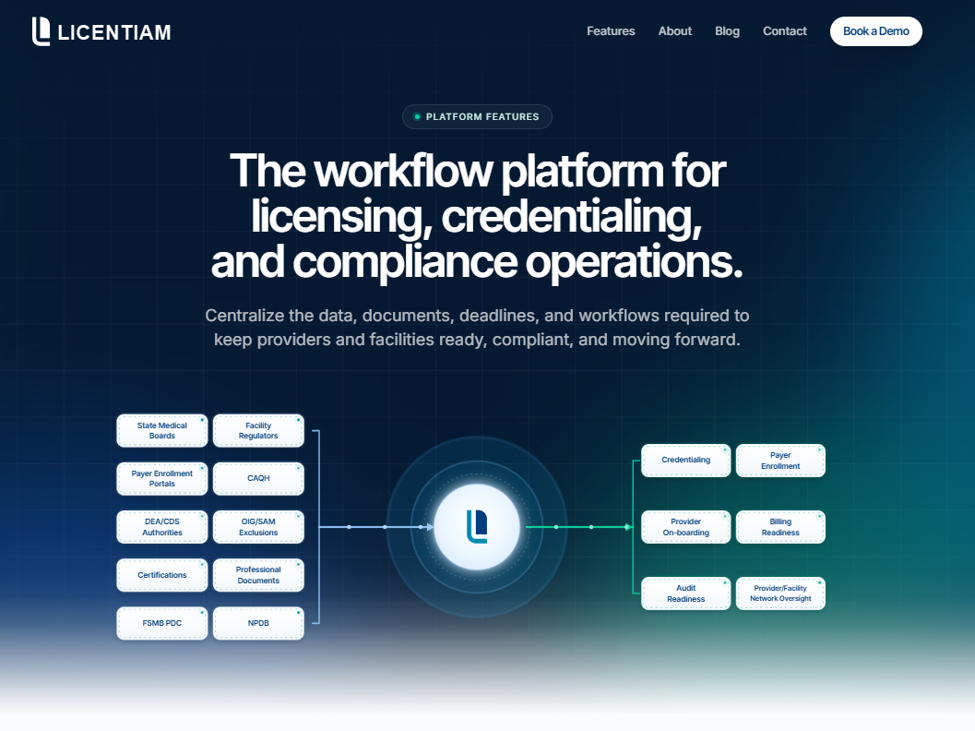
Licentiam is a CRM platform and tech-enabled services partner that supports regulatory compliance through configurable alerts and continuous monitoring workflows.
Teams use Licentiam to identify compliance issues, centralize documentation, and stay organized for audits and license renewals.
Beyond compliance tracking, Licentiam also streamlines provider credentialing, licensing, and payer enrollment workflows across all 50 states and U.S. territories.
AI-assisted automation capabilities are also being developed and released in phases—designed to reduce manual steps, improve consistency, and speed time to revenue.
Request a demo today to learn how Licentiam streamlines healthcare compliance management.
FAQs About Healthcare Compliance Issues
What are compliance issues in healthcare?
Compliance issues in healthcare occur when an organization does not follow federal laws, state rules, or internal policies. These issues may involve billing, patient data handling, staff conduct, or safety practices. Strong compliance measures help clinics and hospitals reduce errors, avoid penalties, and ensure patient safety.
What is the biggest issue in healthcare today?
One of the biggest issues in healthcare is keeping up with complex regulatory requirements while managing care demands. Staffing shortages, rising costs, and technology risks make it harder to stay aligned with compliance standards.
What is the greatest threat to healthcare compliance?
The greatest compliance threat is the lack of ongoing oversight. When organizations rely on one-time training or outdated policies, compliance risks increase. Problems can remain hidden until audits or serious incidents (e.g., workplace injuries or medication errors) force action.
What are the top five ethical issues in healthcare?
The five most common ethical issues in healthcare are patient privacy, informed consent, fair access to care, billing honesty, and conflicts of interest. Organizations should follow ethical standards to prevent these problems and strengthen trust between patients, staff, and leadership.