
Medical credentialing is one of the most challenging administrative tasks in healthcare. Each hospital and insurance company must check a provider’s background. Even if a doctor already holds an updated license in another state, you still need to validate their credentials independently.
This redundancy leads to long wait times before a provider can start work or submit claims. For your healthcare organization, that often means delayed care, lost revenue, and staff frustration.
Medical credentialing services help by handling provider data, applications, verifications, and follow-ups for you. They reduce delays, avoid repetitive tasks, and get your providers credentialed faster so your organization can focus on patient care.
This article lists the best medical credentialing companies that offer credentialing services. But first, let’s define medical credentialing and why it matters.
What Is Medical Credentialing?
Medical credentialing, also known as provider credentialing, is the process of checking a healthcare provider’s qualifications before they can treat patients and bill payers. This includes their education, training, licenses, board certifications, work experience, malpractice history, tax ID number, and NPI registration.
Medical provider credentialing confirms that a doctor or clinician meets the rules set by healthcare organizations and insurance payers.
The medical credentialing process usually starts when a new provider joins a medical practice. The organization (e.g., hospital, clinic, or health system) collects provider information and conducts primary source verification to ensure data accuracy.
After a thorough committee review, the organization may deny or approve providers. Once approved, they can grant clinical privileges and initiate provider enrollment where applicable.
Why Credentialing Services Matter
Medical credentialing takes a lot of time and work for your healthcare organization. Verifying provider data usually involves back-and-forth communication with many outside groups, which can slow the process to 60–180 days or more.
This can delay when a provider can see patients and bill insurance payers, which can affect patient access, operational efficiency, and your revenue cycle management.
Credentialing services manage the provider credentialing process for you. They handle data entry, organize paperwork, verify credentials, track deadlines, and follow up with payers and boards.
These services significantly cut down delays and reduce administrative burden on your team. They also make sure applications are complete and accurate, allowing for quicker approvals.
Provider credentialing services mean healthcare professionals receive their licenses quickly, claims are paid sooner, and your team can focus more on patient care.
Top 5 Medical Credentialing Companies in 2026
After learning the importance of credentialing services, here are the best credentialing companies that offer them.
1. Licentiam
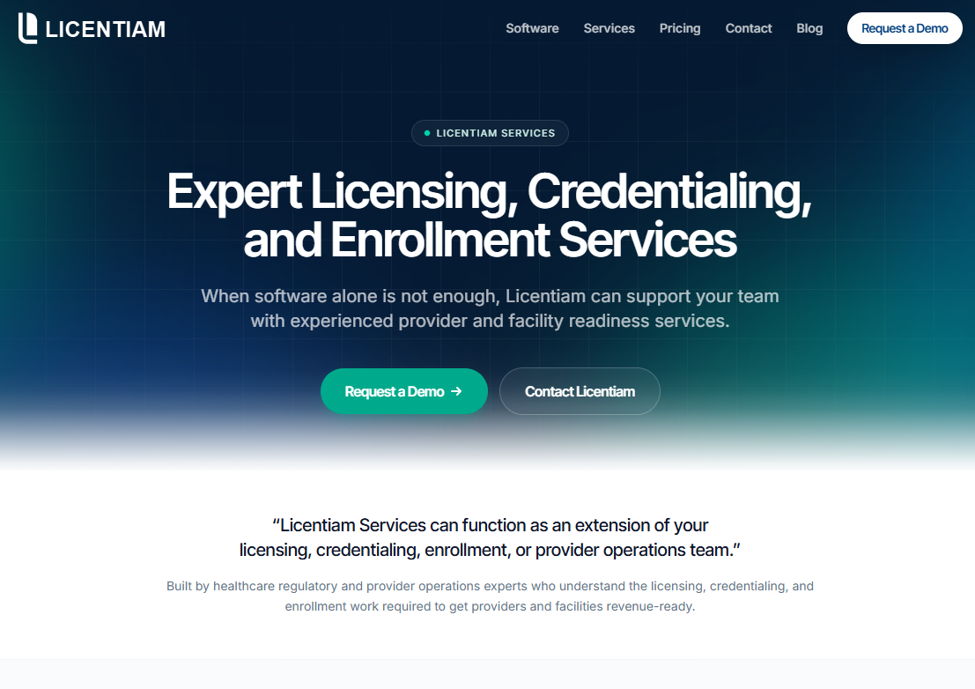
Licentiam combines tech-enabled credentialing services and software to streamline medical credentialing, provider licensing, and payer enrollment across 50 states and U.S. territories.
Licentiam centralizes provider documents and validates them against each state and payer’s unique processes to make sure everything is complete and correct. This approach enables quicker approvals from state medical boards and faster enrollment in private and government insurance programs.
Licentiam’s team also regularly follows up with medical schools, residency programs, and state boards to complete the licensing process faster.
Plus, Licentiam is developing and releasing AI-assisted automation capabilities in phases to further accelerate the process and reduce manual steps.
In fact, clients have saved 3,500+ hours of administrative time using Licentiam’s credentialing software and services. They have successfully reallocated that time toward patient care and revenue generation.
Clients also reported an improvement in regulatory compliance, thanks to Licentiam’s configurable reminders and monitoring workflows (license renewals and screening cadence).
Schedule a demo today to learn more about Licentiam’s credentialing services.
Services Offered
- Healthcare credentialing and re-credentialing
- Primary source verifications
- New license applications and renewals
- Payer enrollment
- Online notaries
- FBI background storage
- Updates on regulatory changes across all provider types
- 1:1 licensing and credentialing specialists
- Access to subject matter experts
- Continuing medical education (CEU) discounts
- Registered agents
Book a short intro call to see how Licentiam’s technology and services can streamline credentialing.
2. Medallion
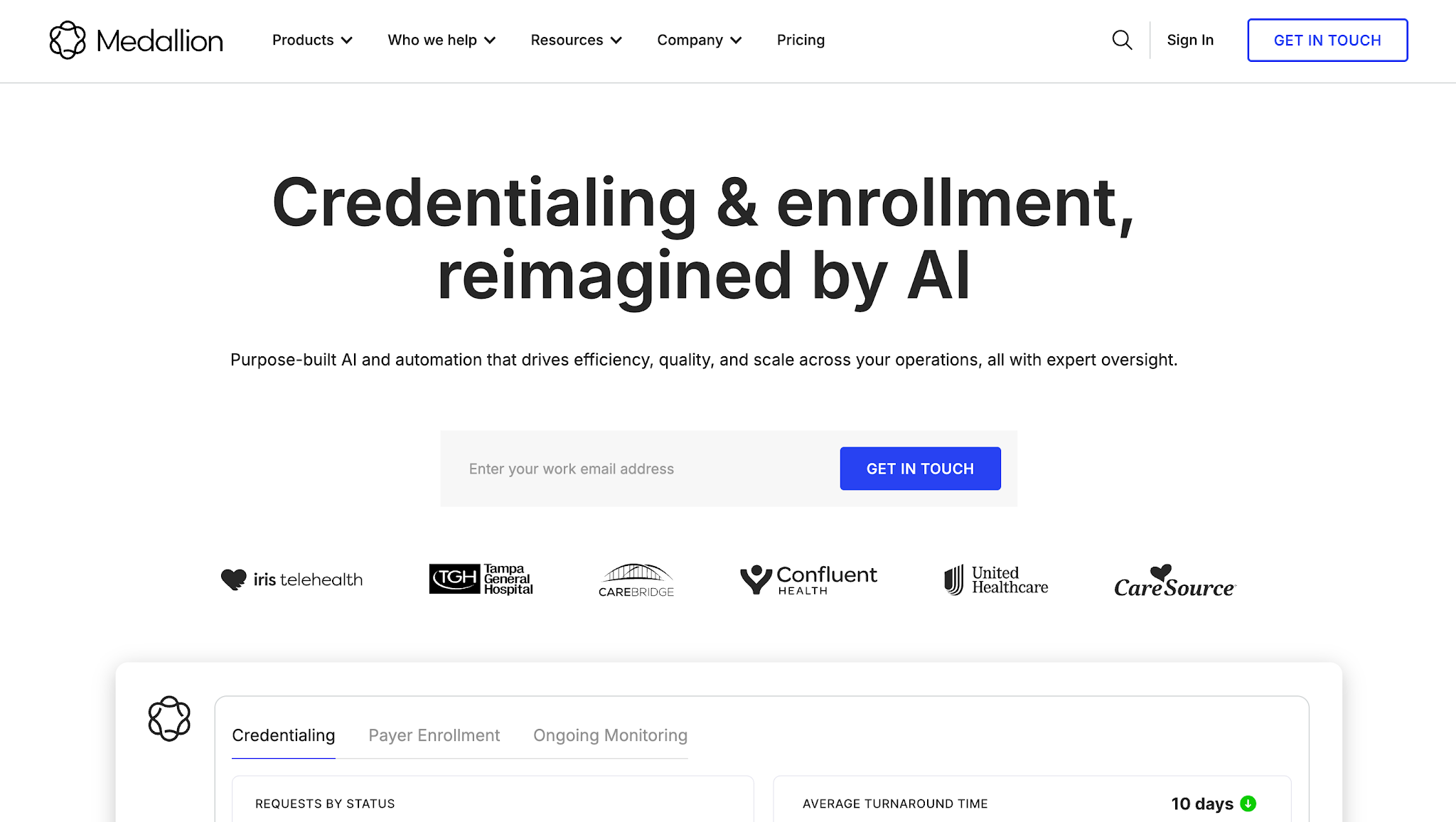
Medallion offers a credentials verification organization (CVO) credentialing solution that helps healthcare organizations simplify credentialing and enable providers to join payer insurance networks faster.
Its service focuses on moving clinicians through verification and committee file preparation with automation and human oversight.
It produces credentialing files in days instead of weeks without compromising data accuracy and quality. This approach speeds up committee approvals and the entire provider onboarding process.
Medallion’s CVO also meets NCQA, Joint Commission, and CMS standards, helping teams stay compliant while cutting manual work.
Medallion can even automate re-credentialing and send instant reminders about expiring licenses to avoid non-compliance.
Services Offered
- Committee-ready credentialing file generation
- Primary source verifications
- Document validation
- Compliance tracking
- Continuous monitoring and proactive notifications
3. Symplr
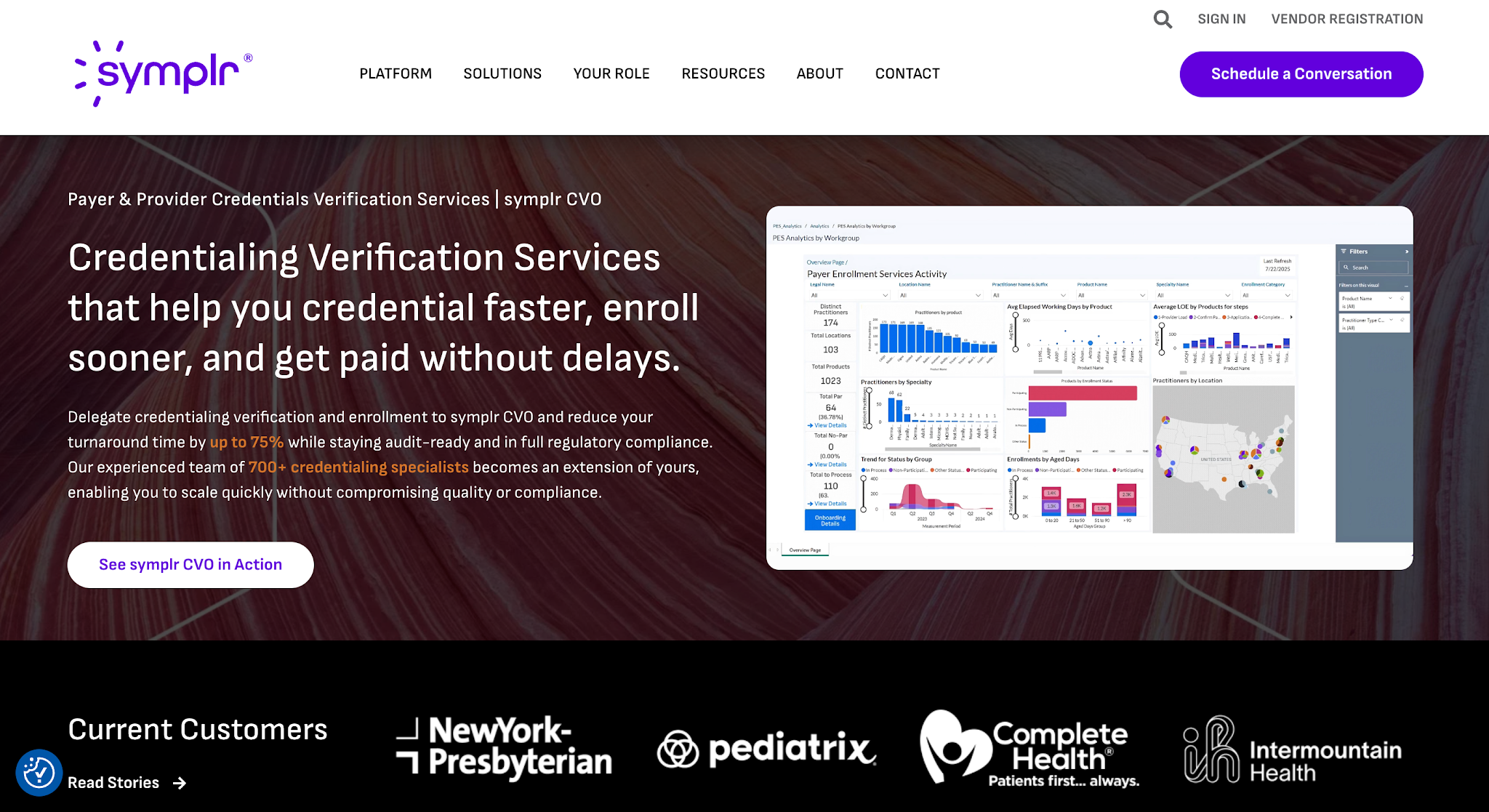
Symplr is another company that offers credentialing verification services designed to reduce administrative burden and ensure regulatory compliance.
Symplr’s CVO helps healthcare providers and health plans focus on patient care and strategy rather than tedious paperwork.
Its service manages primary source verification, license application processes, provider enrollment, and ongoing monitoring. That means teams spend less time on routine checks and follow-ups.
Symplr also uses NCQA-certified methods and automated technology that can significantly cut down credentialing time and eliminate bottlenecks.
Organizations can delegate manual tasks, track credentialing progress in real time, and keep files ready for audits.
Services Offered
- Primary source verifications
- Provider enrollment service
- Licensure support
- Direct Council for Affordable Quality Healthcare (CAQH) connectivity
- Ongoing monitoring and re-credentialing
4. Verisys
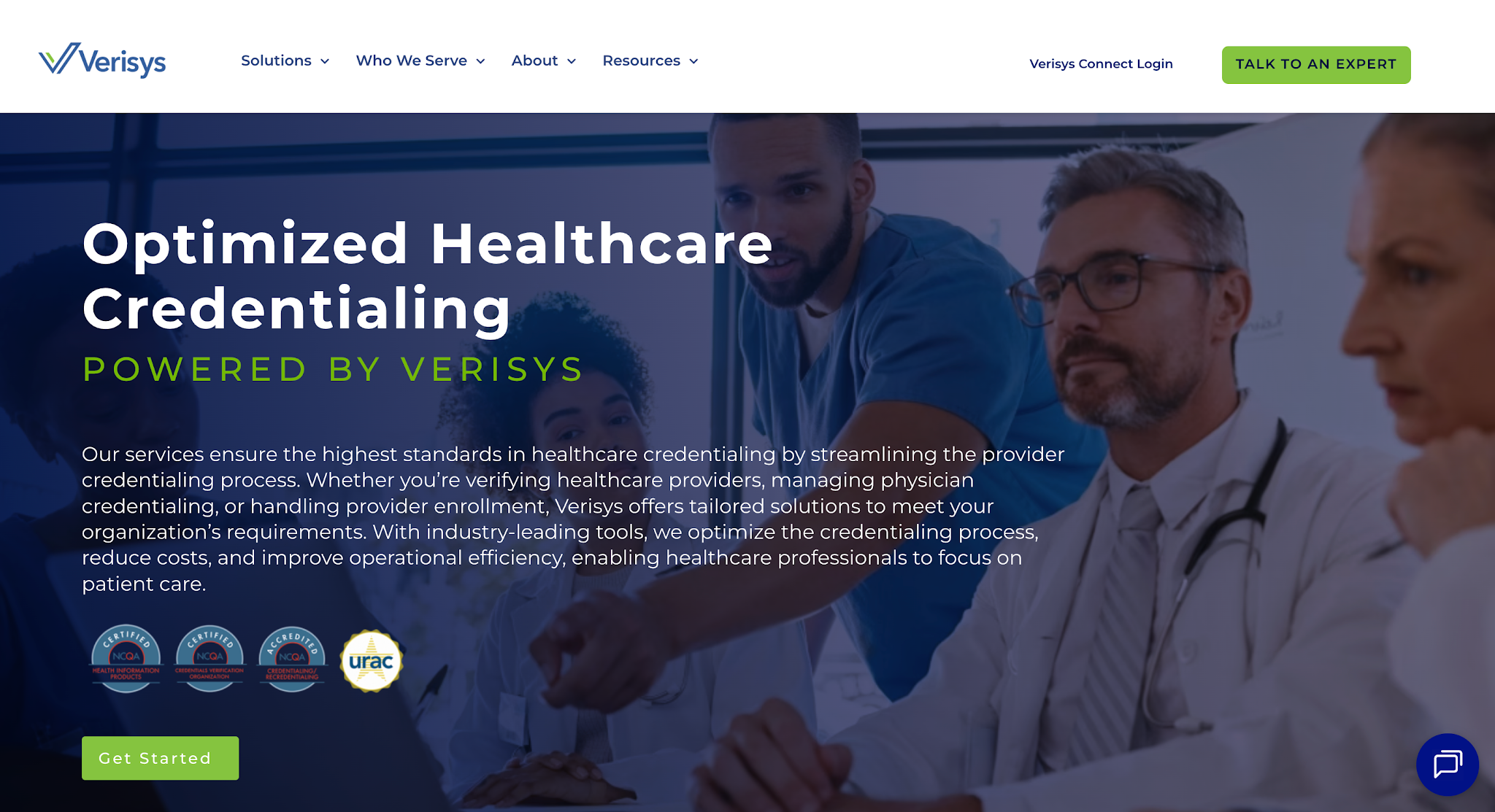
Verisys is an NCQA-accredited CVO that acts as a trusted partner for healthcare organizations. It takes care of administrative tasks to reduce manual work, improve turnaround times, and turn professionals into in-network providers faster.
Verisys validates licensure, education, certifications, sanctions, and other credentials using a large verified data source and dedicated teams.
Verified primary source data are instantly attached to a provider’s profile to speed up committee approvals. Data also aligns with NCQA standards and other licensure standards across all U.S. states, helping ensure credentials remain current and complete.
Plus, Verisys supports continuous monitoring and optimization to maintain ongoing compliance.
Services Offered
- Application gathering
- Provider credentialing and re-credentialing
- Primary source verifications
- Committee review
- Real-time compliance monitoring
5. CureMD
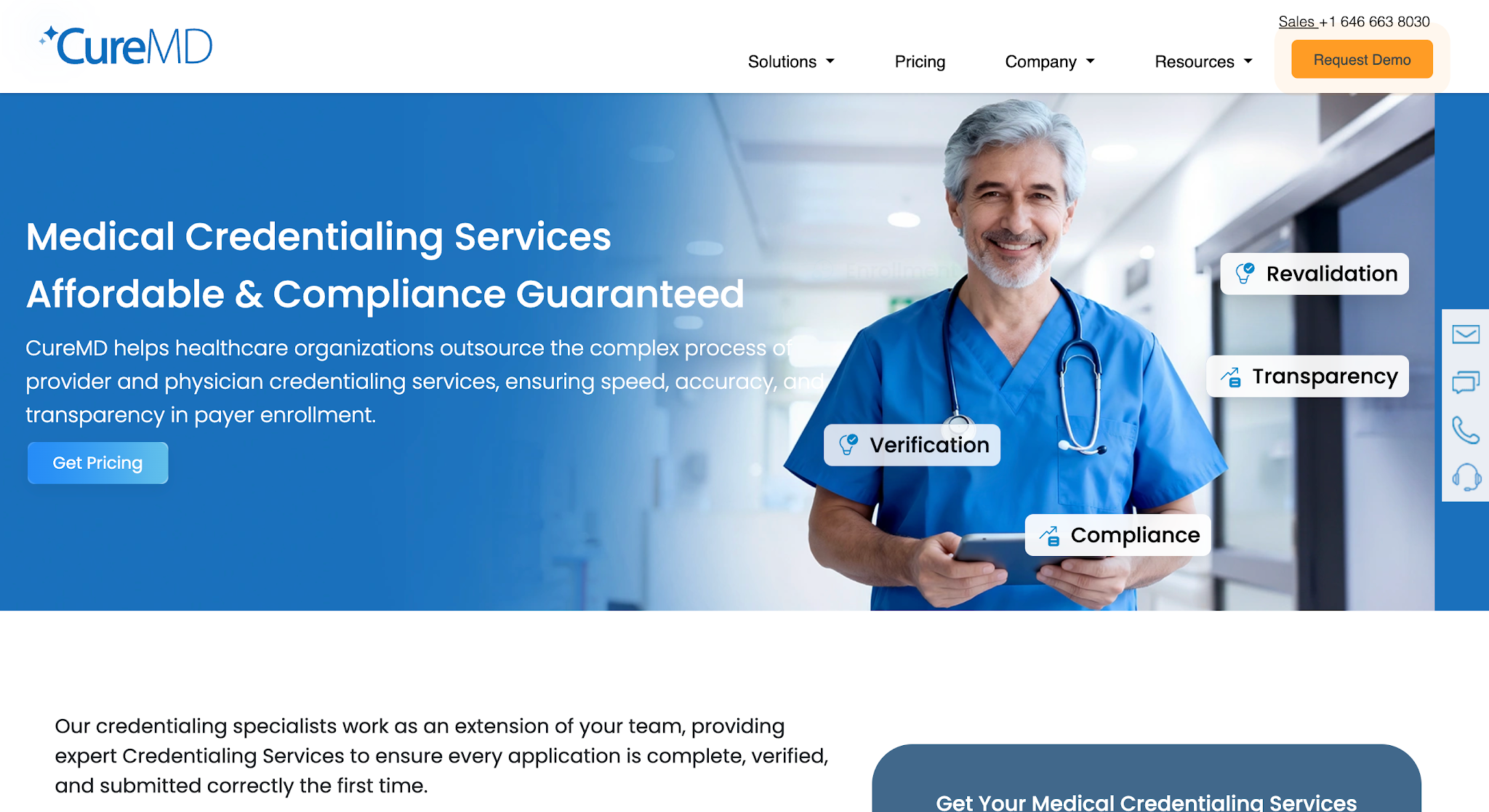
CureMD offers end-to-end physician credentialing services that streamline provider enrollment, insurance credentialing, licensing, and essential registrations (e.g., NPI, CAQH profile, or PECOS).
Their credentialing specialists work alongside your internal team to make sure provider data is complete, verified, and submitted correctly.
CureMD also gives you access to a dedicated account manager and provider portal, which offers full control over all medical credentialing activities, timelines, and outcomes.
Additionally, CureMD handles Medicare, Medicaid, and commercial payer applications so your providers can join government programs and private insurance networks more quickly.
It even provides contract negotiation services to help you secure favorable terms and maximize reimbursement rates.
On top of these capabilities, CureMD takes care of revalidation and re-credentialing to maintain active status with payers. This reduces payment delays and protects your organization’s cash flow.
Services Offered
- Provider enrollment
- Primary source verification
- Application tracking
- Physician credentialing and re-credentialing
- CAQH maintenance
How to Choose the Right Medical Credentialing Service Company
Here are the factors to consider when evaluating different medical credentialing services.
Verify Experience and Expertise
Look for a company that has solid experience in medical credentialing and a strong track record with different healthcare practices.
A service provider with years of experience understands payer expectations, state rules, and other industry standards, which speeds approvals and reduces mistakes.
Ask about their success rate, the number of providers they’ve managed, and other expertise outside of credentialing. This may be document verification, contract negotiation, provider licensing, or CEU management.
Credentialing service companies that have worked with many clinics and hospitals can successfully take care of the most frustrating aspects of credentialing, so you don’t have to.
Evaluate Technology Used
Make sure the credentialing company uses up-to-date tools and a secure platform to support your credentialing needs.
Modern systems centralize all provider files, track application stages, and send configurable reminders for license expirations.
Some platforms even have AI-assisted automation capabilities that reduce manual work and repetitive data entry.
Better technology helps reduce errors and speeds up primary source checks by connecting with databases like CAQH. This is especially important if you manage a large roster of providers or operate across multiple states where requirements vary.
Ask About Average Turnaround Time
Turnaround time varies widely from one credentialing partner to another. Before you sign a contract, ask about their average timelines for primary source verification, payer enrollment, and recredentialing.
Faster turnaround means your providers join networks and start billing sooner, which accelerates time to revenue.
You should also ask how they handle slow payers or delayed responses, and what steps they take to follow up and close open items.
A clear timeline expectation keeps your internal team aligned and prevents surprises in credentialing progress.
Consider Customer Support and Customized Services
Reliable customer support makes a big difference, especially when credentialing gets complex.
Choose a credentialing partner that offers quick support via email, phone, live chat, and online platforms.
Meanwhile, dedicated account managers offer personalized support if you have questions or when deadlines shift.
The right company should understand your concerns and address them quickly. They must also adapt to your current workflow rather than forcing you to adjust to theirs.
Compare Costs
Cost matters, but you should weigh it against service quality and results.
Different credentialing companies price services as flat monthly rates, per provider, or per application.
Get clear pricing upfront and understand what’s included (e.g., re-credentialing, payer follow-up, and technology access) to compare similar offerings.
Avoid service partners that hide fees or charge extra to avoid surprises.
Licentiam Makes Medical Credentialing Easy
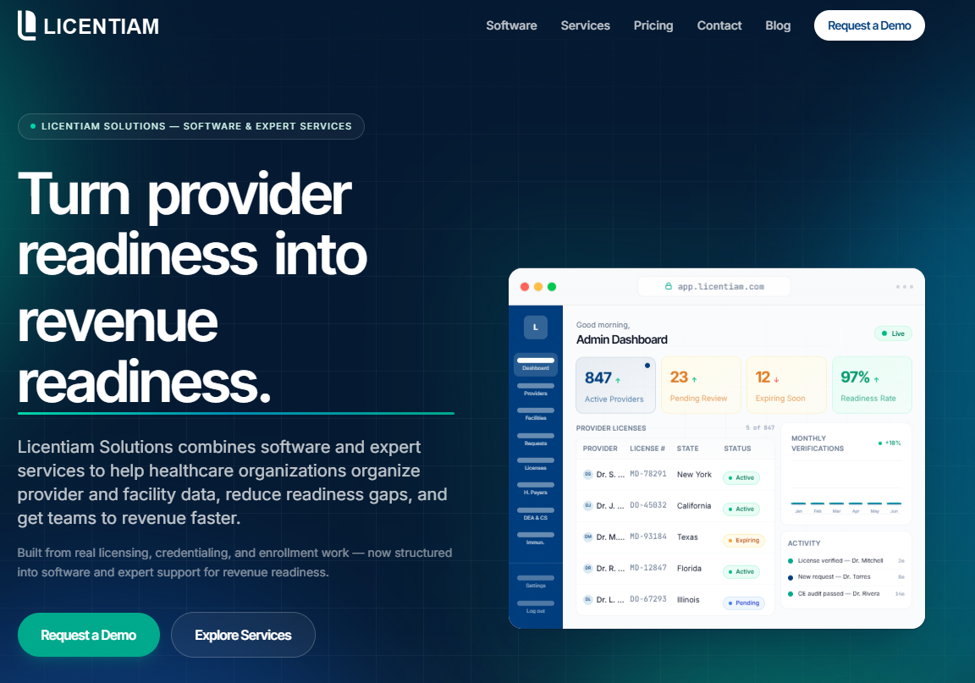
Licentiam is a full-service credentialing solution for healthcare organizations. It combines a centralized CRM with tech-enabled services to streamline medical credentialing, provider licensing, and payer enrollment workflows across all 50 states and U.S. territories.
Licentiam’s team of credentialing specialists organizes provider data, validates information against primary sources, and submits applications on your organization’s behalf.
Additionally, they conduct regular follow-ups with medical schools, residency programs, state boards, and insurance companies to expedite license applications and payer enrollment.
Licentiam is also introducing AI-assisted automation capabilities through a phased rollout. It’s designed to reduce manual work, improve consistency, and accelerate time to revenue.
Licentiam also provides access to audit-ready reports and operational dashboards, which support ongoing compliance and leadership visibility.
Request a demo today to learn how Licentiam simplifies medical credentialing.
FAQs About Medical Credentialing Services
How much does medical credentialing cost?
Medical credentialing costs vary based on provider count, payer volume, and service scope. Some vendors charge per provider, while others offer monthly plans. The average cost per provider ranges between $200 and $500.
What does a medical credentialing specialist do?
A medical credentialing specialist collects provider documents, verifies licenses and training, and submits applications to payers. They track approvals, handle follow-ups, and handle the provider onboarding process.
Are credentialing services worth it?
Yes, credentialing services are often worth it for healthcare organizations that want faster approvals and fewer errors. Outsourcing saves staff time, reduces claim delays, and improves consistency. This is especially useful for group practices that manage multiple providers, locations, and payer relationships.